A Heat Dome is Bad Enough, But Corn Sweat?
July 23, 2025

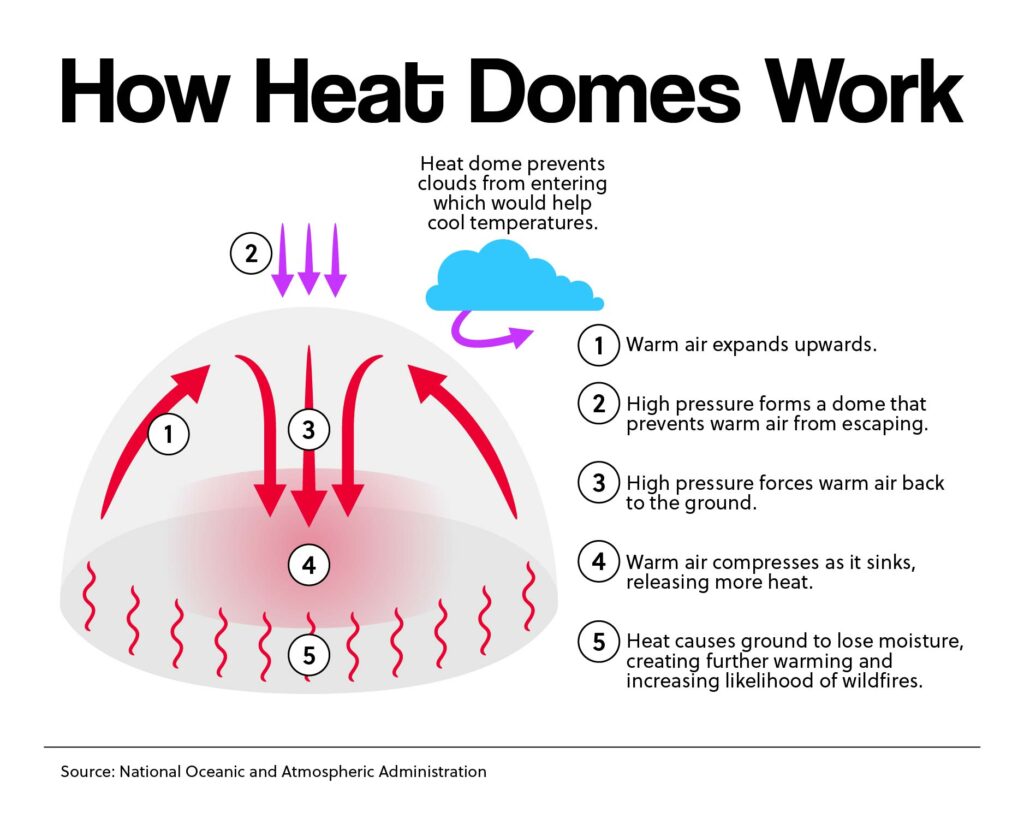
The US Midwest and South are sweltering under a heat dome this week, with temperatures nearing or cresting over 100° Fahrenheit. Heat indexes are hitting the 115° mark from Texas to Ohio to Minnesota. For some, it might be a dry heat. But for most, it’ll be the sticky, humid kind, made all the worse by a phenomenon known as “corn sweat.”
Heat domes occur when an area of high pressure in the atmosphere pushes down hot air and traps it on Earth’s surface. This often lasts for days at a time. Heat domes are responsible for many of the grueling heat waves passing over the US and Europe this summer. And high humidity can make it seem even hotter. This happens as wet air alters with the body’s ability to regulate its temperature.
Humidity can come from a lot of places. It can evaporate from rivers and lakes. It can also be carried up through the US from warm Gulf or Atlantic waters. At this time of year, in the so-called “Corn Belt” states, much of the wetness in the air doesn't come from the ocean. Rather, it comes from those famous “amber waves of grain.”
When temps rise, plants like corn sweat just like humans do. They exude moisture so that the evaporation (or, as it’s called when leaves are doing it, evapotranspiration) can help cool them. Corn Belt states include Ohio, Illinois, Iowa, and Nebraska. There, millions of acres of cornfields cover the landscape. The plants release enough moisture to send the heat index soaring.
“Everything is wet, saturated,” Bob Oravek of the National Weather Service told Scientific American. “The Midwest is famous for high dew points from the vegetation.”
Reflect: What kinds of changes do you notice in your body, mood, or daily routine when it gets really hot or humid?
News brought to you by 
Read More News Stories Today!