The Way We Eat is Now Eating Away at Our Livable Planet
Provided by: Re:wild|Published on: May 16, 2025|Last updated: July 16, 2026
Grades: 9, 10, 11, 12, AP
Type: Articles/Websites
Subjects: Biology, Earth and Space Sciences
Authors: Re:wild
Location: Earth, Oceania
This resource has been reviewed by SubjectToClimate's climate scientists and verified for scientific accuracy and up-to-date information. Learn about our review process →
This resource has been reviewed by SubjectToClimate's climate scientists and verified for scientific accuracy and up-to-date information. Learn about our review process →
Synopsis
- In this article from Re:wild, students will learn about the impacts of industrial agriculture and meat production on habitat destruction, resource use, and climate change.
- Students will learn about the efforts to change course, the barriers to implementing sustainable agriculture, and what everyone can do to help.
Teaching Materials
Positives
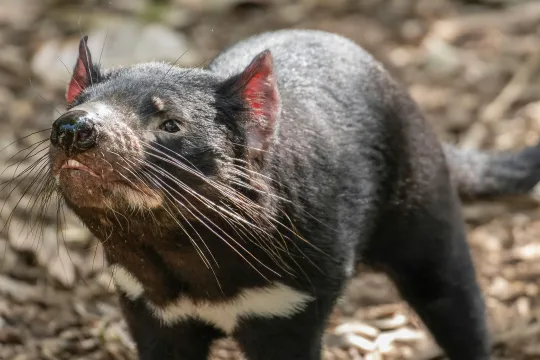
- The article hooks students in with an anecdote about the release of Tasmanian Devils in a wildlife sanctuary in Australia.
- Students are given ideas for personal action and action towards systemic change, showing the importance of both.
Prerequisites
- Students may need the term zoonotic defined before reading.
- Students should understand how deforestation affects biodiversity, climate change, and ecosystems.
Differentiation & Implementation
- The article touches on the health claims made to promote the industrial agricultural complex. Students can research these health claims and determine how much truth there is behind them. Students can also read about studies done with plant-based diets and how they affect health.
- This article could be used in an AP Environmental Science, AP Biology, or ecology class to connect land use practices with the carbon cycle, water cycle, nutrient cycles, biodiversity loss, or climate change.
- Students can research local wildlife sanctuaries or other organizations working to protect animal populations and preserve biodiversity.
The resource offers data and proof regarding how animal husbandry affects the climate and how switching to a plant-based diet may help reduce global warming, restore ecosystems, and enhance human health. It is advised to use this well-resourced teaching material.
Teaching Tips
Standards
Resource Type and Format
Scientist Reviewed
This resource has been reviewed by SubjectToClimate's climate scientists and verified for scientific accuracy and up-to-date information. Our review process ensures that every resource in our library reflects the current state of climate science.
Learn about our review process →