Ocean Plastics Unit (6-8)
Provided by: Ocean Wise|Published on: July 9, 2024|Last updated: July 16, 2026
Grades: 6, 7, 8
Type: Lesson Plans
Subjects: Biology, Earth and Space Sciences
Authors: Ocean Wise
Location: Earth, North America

This resource has been reviewed by SubjectToClimate's climate scientists and verified for scientific accuracy and up-to-date information. Learn about our review process →
This resource has been reviewed by SubjectToClimate's climate scientists and verified for scientific accuracy and up-to-date information. Learn about our review process →
Synopsis
- In this six-lesson unit, students will learn the impact of plastic pollution on marine life, human health, and climate change.
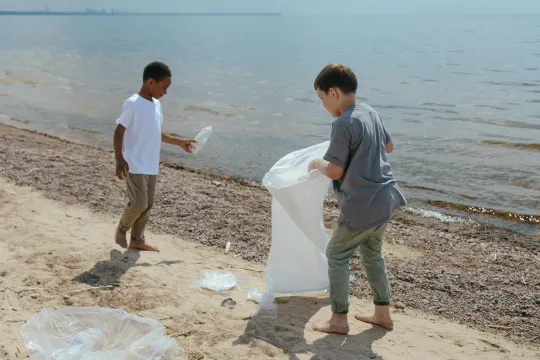
- Students will research the history of plastic, read about and simulate the path plastic takes to end up in the ocean, read about the dangers of microplastics, analyze the case study of a rubber duck spill in the ocean, understand how plastics exacerbate climate change, and participate in a community cleanup.
Teaching Materials
Positives
- Students will enjoy channeling their learning into something creative as they create comic strips in Lesson 2.
- Lesson 6 includes a focus on traditional ecological knowledge and the Indigenous concept of being stewards of the land.
Prerequisites
- In Lesson 1, the link to The Plastic Wave video is broken. The video can be found here. The link to the article, Properties of Plastic, is also broken. The article can be found here.
- In Lesson 2, the link to the TEDEd video is broken but can be found here, and the link to The Plastic Pledge is broken but can be found here.
- In Lesson 4, the podcast under Additional Resources is unavailable. Instead of playing it, teachers can just explain the duck spill and transition into the activity with the Marine Debris map.
- In Lesson 5, the link to the reading, Plastic Waste and Climate Change, is broken. The article can be found here.
- Many of the links for resources for the shoreline cleanup will take you to the homepage, and not directly to the resource.
Differentiation & Implementation
- Using the glossary as a guide, teachers can create a word wall for students to reference throughout the unit.
- The Plastic Wave video has many opportunities for students to answer questions and, though it does give a few seconds for student responses, students may benefit from pausing the video for additional processing time.
- After completing Lesson 1, students can explore the recycling system in their school and propose methods for improvement.
- If you are short on class time for Lesson 3, students can read the executive summary for the Washing Report rather than the whole report.
- Teachers can make community connections by opening the schoolyard or community cleanup to the public.
This six-lesson unit educates students about the myriad impacts of plastics in oceans. The guidebook is well-sourced, with numbered reference citations throughout. The resource harnesses history, science, and traditional ecological knowledge to craft a unit ranging from plastic transport to climate change. Notably, each lesson ends with a ‘take action’ page to empower students. This resource is recommended for teaching.
Teaching Tips
Standards
Resource Type and Format
Scientist Reviewed
This resource has been reviewed by SubjectToClimate's climate scientists and verified for scientific accuracy and up-to-date information. Our review process ensures that every resource in our library reflects the current state of climate science.
Learn about our review process →