Eco-Wave Energy Challenge
Grades: 6, 7, 8
Type: Lesson Plans
Subjects: Biology, Engineering
Authors: EarthEcho International
Location: Earth
This resource has been reviewed by SubjectToClimate's climate scientists and verified for scientific accuracy and up-to-date information. Learn about our review process →
This resource has been reviewed by SubjectToClimate's climate scientists and verified for scientific accuracy and up-to-date information. Learn about our review process →
Synopsis
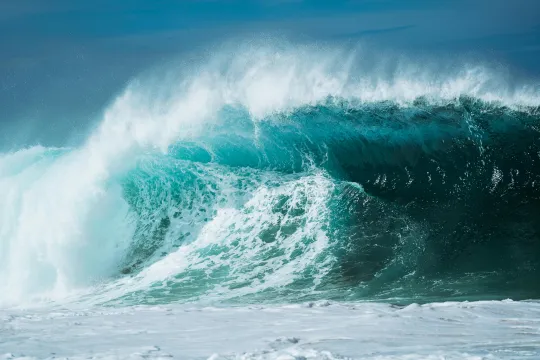
- This lesson from EarthEcho International will take 4-4.5 hours and introduce students to wave energy converters (WECs), their limitations and history, and how scientists, architects, and designers use biomimicry to solve problems.
- Students will learn about various examples of animal adaptations that have been inspiration for solving problems, work in a group to design a WEC that uses biomimicry, and perform iterative tests on their device.
- The resource also includes presentation slides.
Teaching Materials
Positives
- The section on iterative testing does a great job of detailing the importance of failure in the scientific process and promoting a growth mindset in students.
- Having students attempt to solve a problem that scientists are still working on will help them feel empowered that they can contribute to finding a solution to a real-world problem.
Prerequisites
- Students may need background information on animal adaptations.
- Teachers may also need to emphasize the point about adaptations in this capacity are referring to an animal's structure and not its behavior.
Differentiation & Implementation
- When doing the jigsaw activity with the examples of biomimicry, students can practice summarization by condensing their section into 1-2 sentences to share with the other groups.
- Though the biomimicry video touches on the subject, teachers may want to go over fossil fuels, the greenhouse effect, and climate change in-depth with students, so they understand the necessity for clean energy. This can also promote buy-in for the lesson.
- To mitigate some issues that can arise with limited materials, teachers can give students a day to plan and bring in recycled materials from home if they have the desire and the means. Teachers should set parameters for what can be brought in and should also provide an abundance of materials for students to ensure that those who cannot bring in materials can still fully participate.
Students can study the history of wave energy and how scientists' efforts to convert wave energy into electrical power have paid off throughout time. Because wave energy has the potential to supply clean energy to millions of people worldwide, this resource encourages students to investigate wave energy as an alternative energy source by showing them how to use the Edinburg Durk machine to create electricity. The lesson passed our science review procedure after we went over the instructional activities.
Teaching Tips
Standards
Resource Type and Format
Scientist Reviewed
This resource has been reviewed by SubjectToClimate's climate scientists and verified for scientific accuracy and up-to-date information. Our review process ensures that every resource in our library reflects the current state of climate science.
Learn about our review process →