Beautiful Coral Reef Impacted by Florida Heatwave
Provided by: The Pulitzer Center|Published on: November 20, 2025|Last updated: July 16, 2026
Grades: 8, 9, 10, 11, 12
Type: Articles/Websites
Subjects: Biology
Authors: Benji Jones, Jennifer Adler
Location: North America > United States > Florida

This resource has been reviewed by SubjectToClimate's climate scientists and verified for scientific accuracy and up-to-date information. Learn about our review process →
This resource has been reviewed by SubjectToClimate's climate scientists and verified for scientific accuracy and up-to-date information. Learn about our review process →
Synopsis
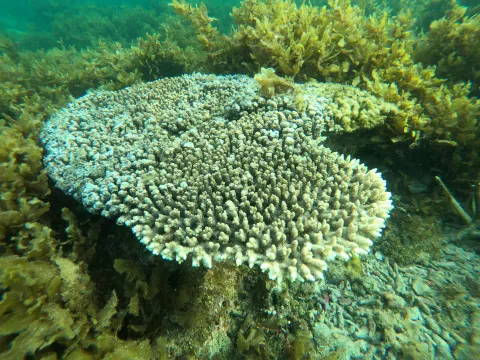
- This article from The Pulitzer Center features images and a detailed account of the changes observed in coral reefs in the Florida Keys before and after periods of extreme heat.
- Students will see the damage that excessive heat in the ocean can cause to the corals, affecting the ecosystem as a whole.
Teaching Materials
Positives
- As stated in the article, this is an impactful reminder that climate change is happening now, not in the future.
- The photographs and the author's personal story do an excellent job of harnessing the reader's emotions.
Prerequisites
- Students should be familiar with climate change and the importance of coral reefs to marine ecosystems.
Differentiation & Implementation
- This article may cause some students to feel hopeless. To help students process feelings and channel them into action, the class can organize their takeaways from the article into lists of things that bring hope and ways to take action. With the action items, students can brainstorm ways they can act as an individual and what actions might need to take place at a regional or national level.
- After reading, students can explore this resource to see how some people channel their feelings about this issue into art and activism.
- Teachers can use this article as a hook into a lesson about the impacts of climate change on the ocean.
- This article can be used to show the connection between Sustainable Development Goal 13, Climate Action, and SDG 14, Life Below Water.
This resource from the Pulitzer Center features a firsthand report and investigative project about the decline of coral reefs in the Florida Keys. Created by a trusted journalism organization, this resource doesn't include original datasets, but offers a way to spark classroom conversations about environmental change and climate awareness.
Teaching Tips
Standards
Resource Type and Format
Scientist Reviewed
This resource has been reviewed by SubjectToClimate's climate scientists and verified for scientific accuracy and up-to-date information. Our review process ensures that every resource in our library reflects the current state of climate science.
Learn about our review process →