Computer Science Lessons and Activities
This guide offers 8 computer science lesson plans and activities that connect technological advancements with the urgent need for climate solutions. Advancements in science and technology have gone hand in hand throughout history. Now, computer science supports work in the natural sciences more than ever, as everything from how the brain works to how the climate is changing requires advanced modeling. In 2021, the Nobel Prize in Physics was awarded for work contributing to our understanding of complex physical systems. One-half of the award was jointly given to Syukuro Manabe and Klaus Hasselmann “for the physical modeling of Earth’s climate, quantifying variability and reliably predicting global warming.” Studying climate change is an important application of computer science; it provides relevant real-world problems your students can tackle! SubjectToClimate has compiled a list of eight computer science lesson plans and activities to help students see that computer science education is integral to solving the climate crisis.
Lessons & Activities
In these lessons and activities, students will encounter a range of climate change topics, including changes in weather, pollution, and habitat loss. The following computer science resources cover topics for students in grades 3-12, including AP, and these free resources are sure to get students asking questions and making connections between computer science and climate change.
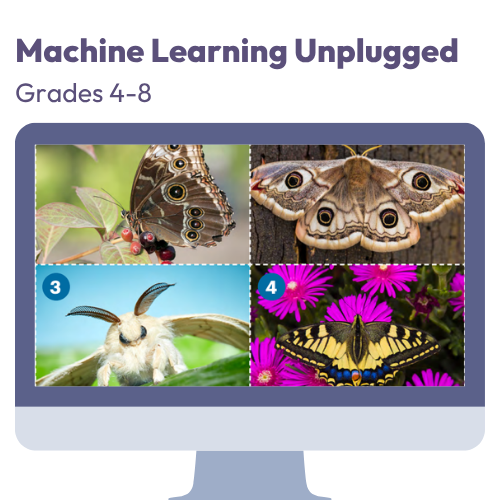
This unplugged lesson from LabXchange introduces students to machine learning concepts through hands-on sorting, classifying, and pattern-recognition activities that require no computer access, making it accessible in any classroom setting. Working in small groups with printed Data Set Cards, students mirror the way machine learning algorithms are trained on data, building foundational computer science and data literacy skills in the process. Teachers can connect the lesson to climate change by discussing how AI can be used to track animals, monitor biodiversity, and develop mitigation and adaptation strategies, as well as by exploring the environmental costs of AI.
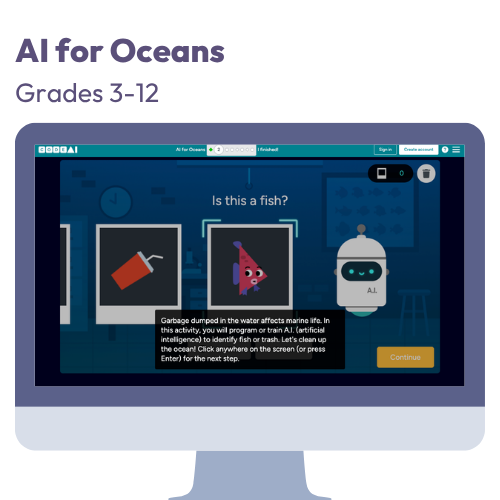
In this engaging computer science lesson from Code.org, students work through video game-like modules to teach a robot to clean up the ocean using machine learning techniques, classifying objects as "fish" or "not fish" and then expanding their training data with their own labels. The self-paced modules introduce students to the fundamentals of computational thinking and machine learning, showing how training data allows a model to classify new information. A detailed lesson plan with teaching tips and discussion prompts makes the lesson easy to prepare, and the built-in flexibility to explore topics like ethics and bias makes it a great fit for a range of grade levels.
This 60-minute interactive tutorial from MIT Scratch gives students a chance to channel their climate anxiety into action by using basic Scratch coding skills to creatively problem-solve issues that matter to them. Students build projects that connect computer science to real-world climate solutions, making it a natural bridge between what they are learning in science and math classes and the world they want to shape. The lesson is easy to prepare, with a student activity worksheet and educator references that include sample data outputs, and it works best with mixed-level groups. It is a great option for middle school students looking to combine creativity, coding, and climate action in a single engaging project.
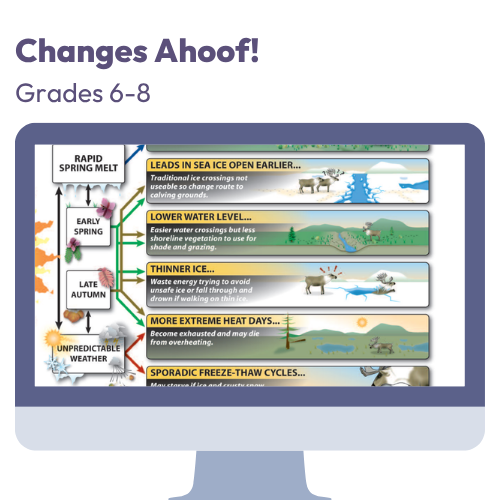
In this lesson from the Smithsonian National Museum of Natural History, students run a computer model to investigate how climate change is impacting caribou in the Arctic, focusing specifically on the effects of insect activity and snow levels on the species. The lesson highlights the important role of modeling in understanding climate change and connects naturally to what students may be learning in science and math classes. A student activity sheet and educator references with sample data outputs make the lesson easy to prepare for, and students work best in mixed-level groups, though the model is accessible enough for most middle school learners. Extend the fun by encouraging students to make their own game!
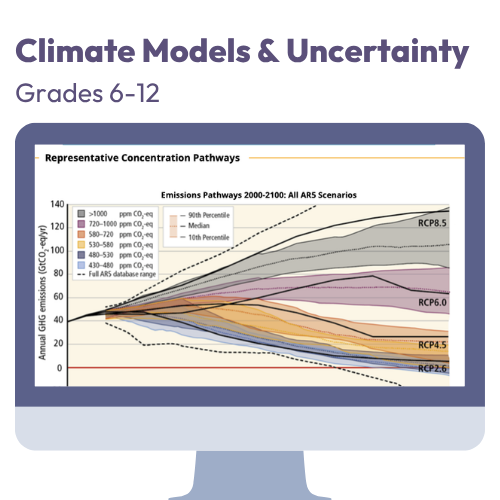
This middle and high school lesson from MIT Environmental Solutions Initiative asks students to investigate how scientists quantify and communicate uncertainty by exploring climate models, using a podcast, a game, and two readings structured as a jigsaw activity. The lesson emphasizes the importance of a common scientific language and includes a well-constructed student worksheet and teacher discussion questions, requiring very little preparation for such a rich learning experience. Students begin by listening to the podcast as a class, then move into the game individually or in groups before diving into the readings, making for an engaging lesson for science and math.
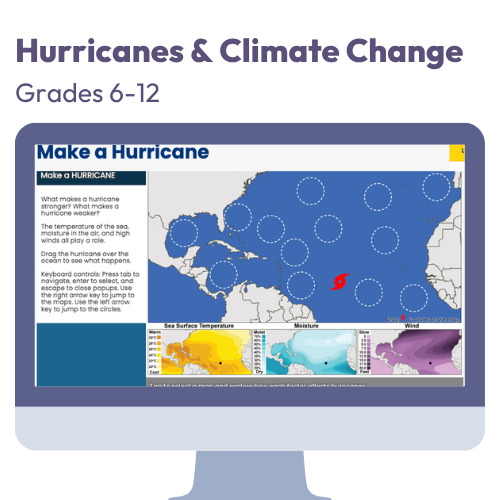
In this computer science lesson from the MIT Environmental Solutions Initiative, students use models and data to explore the factors influencing storm frequency and resilience, working through a podcast, a computer model, and data-analysis activities that can be completed individually or in groups. The lesson wraps up with a discussion of resilience, giving students the chance to imagine and analyze solutions to mitigate the impact of climate change. A well-constructed student handout and teacher discussion questions make the lesson easy to prepare and straightforward to facilitate, with structured prompts that guide students through each section.
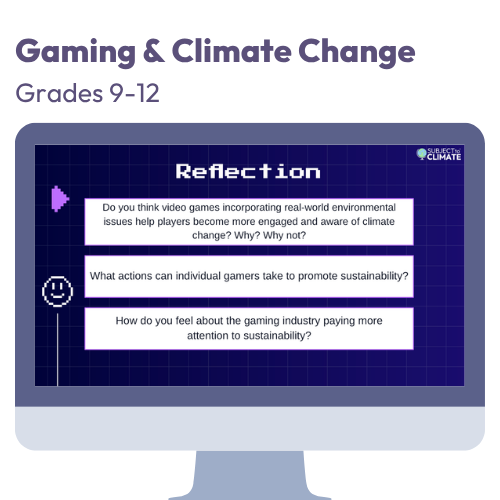
This lesson, written by educator Yen-Yen Chiu, taps into students' existing interest in gaming by prompting them to investigate how computer games can teach about climate change and drive positive behavior change. Students begin with a guided discussion about their own gaming experiences, then complete a reading with reflection and discussion prompts before choosing to either compare and contrast climate change games or design their own, with built-in differentiation based on coding and game design experience. A Google Slides deck makes the lesson easy to prepare for and straightforward to facilitate, offering a rich, student-driven learning experience.
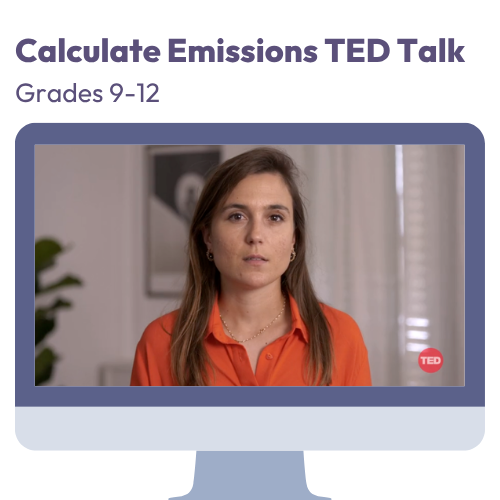
This 10-minute TED video features green technologist Charlotte Degot. Degot explores how CO2 emissions are currently calculated and how artificial intelligence and data science could offer a more accurate approach. The speaker's optimistic take on AI can inspire students to pursue computer science and see themselves as problem-solvers tackling real-world challenges such as climate change. Short enough to pair with lessons teachers have already planned, the video works well as an introduction to a lesson or unit on AI, or as a wrap-up that shows students how the skills they are learning can be applied to make a meaningful difference in the world.
These free lesson plans will help you bring climate change topics into your computer science curriculum. As students learn how important computer science is for understanding our natural world, especially through the powerful models it enables, they will become more invested in building their computer science skills. Be sure to check out the SubjectToClimate database to find even more computer science lesson resources to inspire the future programmers in your classroom.
Author

Greta Stacy
Greta Stacy is a high school science teacher. She has previously taught in Ecuador, Qatar, the United Kingdom, and the United States. Greta is passionate about giving students real-world, hands-on experiences doing science.
Some Resources in this Guide Provided by Our Partners: